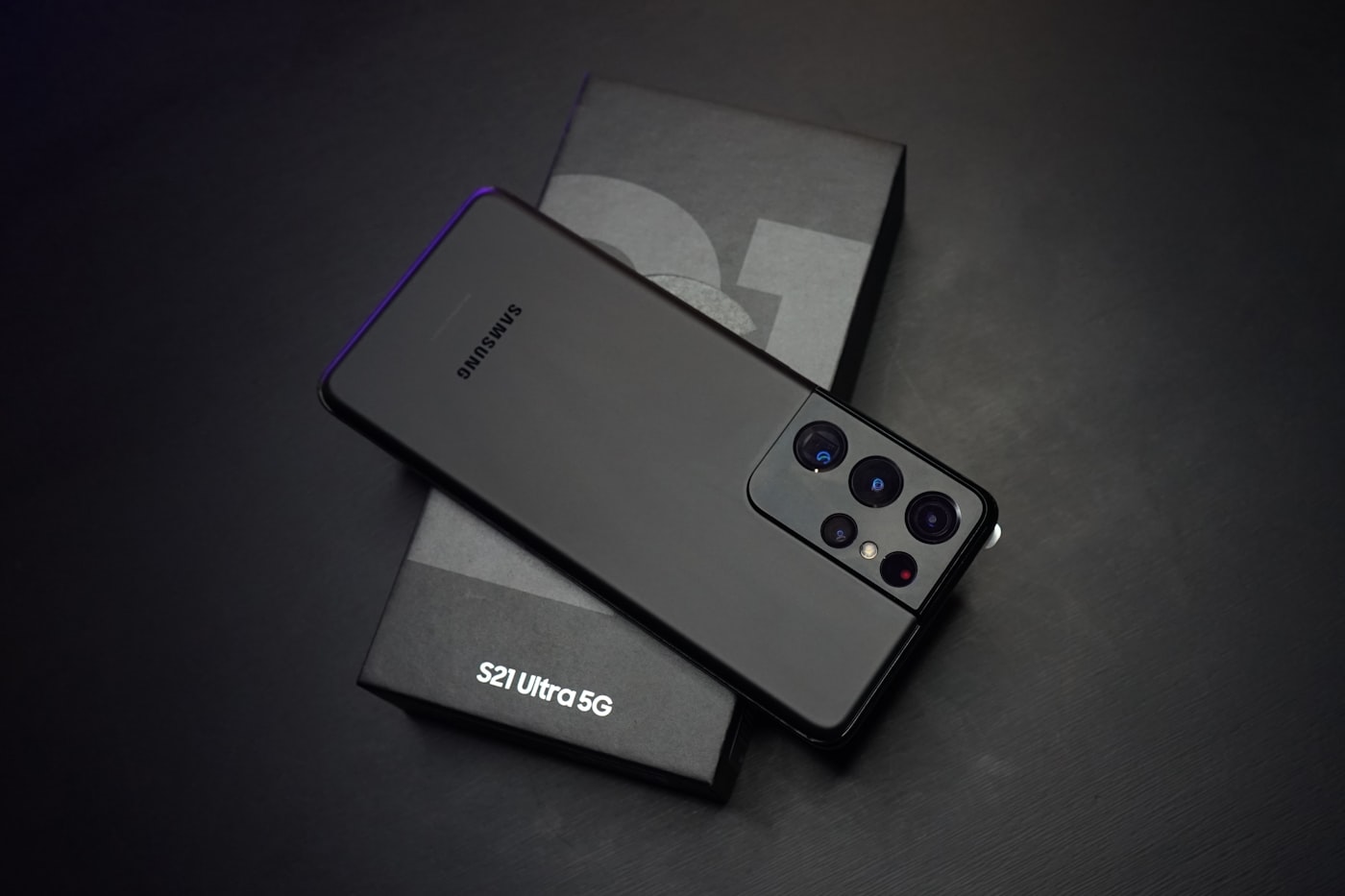
I ordered the Galaxy S26 Ultra in Titanium Blue (256GB, $1,299) through Samsung.com. It arrived in Samsung's new shipping carton design — slightly smaller than previous years, still using the same magnetic-seal product box inside. The product box is matte black with a debossed Samsung logo, and the S26 Ultra model name is printed in a small sans-serif below it.
Everything in the Box
Samsung's packaging uses a two-layer system: the phone sits in the top tray, accessories are in a second tray below.
Top tray:
- Galaxy S26 Ultra in a thin film wrap — the S Pen is already inserted in its silo at the bottom of the phone, which is a nice touch; it means you discover it when you pick the phone up rather than hunting for it in the accessories
- Quick start guide — a small folded card that's genuinely more useful than Apple's equivalent, covering the S Pen, the new AI features, and Samsung DeX setup in brief
Bottom tray:
- 45W USB-C fast charger (Samsung's new smaller design, roughly the size of a large dice cube)
- 1.8m USB-C to USB-C cable — braided, the same as last year
- SIM ejector tool
- Samsung regulatory card
No earphones, no case. Samsung stopped including earphones with S-series phones in 2021, the same year as Apple.
The Charger Situation
This is worth calling out specifically because it's the clearest differentiator from Apple's current offering. Samsung includes a 45W adapter that's genuinely useful — not a slow 5W legacy charger, not just a cable. The S26 Ultra supports up to 65W wired charging, so the included 45W charger is slightly below its ceiling, but it'll charge the 5,000mAh battery from 0 to 80% in about 45 minutes. From dead to full in roughly 65 minutes.
If you want to hit the full 65W speed, you're buying Samsung's 65W adapter separately for $49. Most people won't bother — 45W is fast enough for daily use, and the included charger is far better than no charger at all.
Build Quality First Impressions
The Titanium Blue finish is more muted than marketing photos suggest — it's closer to a deep slate blue in natural light, which I actually prefer. The Armor Titanium frame is noticeably stiffer than the aluminum on the standard S26, and the flat sides give the phone a tool-like quality that appeals to me more than curved rails.
The display is one of the first things you notice: 6.9 inches of Dynamic AMOLED 2X, 3088×1440, and brightness that manages to be genuinely visible in direct sunlight without cranking to a level that hurts to look at in a dark room. The bezels are thin and symmetrical — Samsung has always been good at this, and the S26 Ultra continues that.
The S Pen sits in its slot flush with the bottom of the phone. Removing it triggers a small popup with suggested uses, which you can disable in settings if it annoys you. The pen itself feels smooth to write with on the first test — there's a satisfying low-latency feel that Samsung's marketing claims is 2.8ms. I didn't measure latency with instruments, but casual note-taking felt natural.
The S Pen Is Still a Feature for a Specific Person
I've owned every Note and S Ultra going back to the Note 10. I still don't use the S Pen more than a few times a month. If you're a doctor, architect, student who takes handwritten notes, or anyone who works with detailed sketches or annotates PDFs professionally — the S Pen is a genuine differentiator. For everyone else, it adds bulk to the phone and you'll occasionally forget it in the charging case when you need it.
Samsung knows this. The AI features integrated with the S Pen this generation (live translation on handwritten text, "Circle to Search" improvements) are specifically designed to make the pen feel useful for people who wouldn't otherwise pick it up. Whether that's persuasive depends on how you work.
Weight and Feel in Hand
The S26 Ultra weighs 228g — 11g heavier than the iPhone 17 Pro Max. The weight is noticeable if you're coming from a lighter phone. The size (6.9 inches, 75.8mm wide) is also at the far edge of one-handed usability for most people. I can use it one-handed, but I have to consciously shift my grip for the top of the screen.
This has always been the Ultra's trade-off: you get more screen real estate, the S Pen, and a larger battery, but the physical footprint requires adjustment if you're coming from a standard-size phone. If you've been using any Ultra-class phone for a generation or two, you're already acclimated.
Packaging Comparison: S26 Ultra vs. iPhone 17 Pro
Side by side: the S26 Ultra box is taller, heavier, and includes meaningfully more. Samsung includes a 45W charger and 1.8m cable; Apple includes only a 1m cable. The unboxing ritual of the S26 Ultra takes longer — there's more to discover. Apple's unboxing is finished in 45 seconds. Neither approach is wrong, but if you care about getting everything you need to use the phone on day one, Samsung currently has the edge.
The Box Verdict
Samsung delivers one of the more complete flagship unboxings available right now. The 45W charger and 1.8m braided cable are genuinely useful inclusions. The phone's build quality out of the box is excellent, the S Pen discovery is a nice moment, and the packaging itself feels appropriately premium for $1,299. Full review after several weeks of daily use.
Disclosure: Purchased at retail via Samsung.com. No affiliate relationships active for this review.